






Security and fraud risk: how to manage them effectively

In today’s increasingly digitized and connected business landscape, security and the risk associated with fraud have become priority issues to...
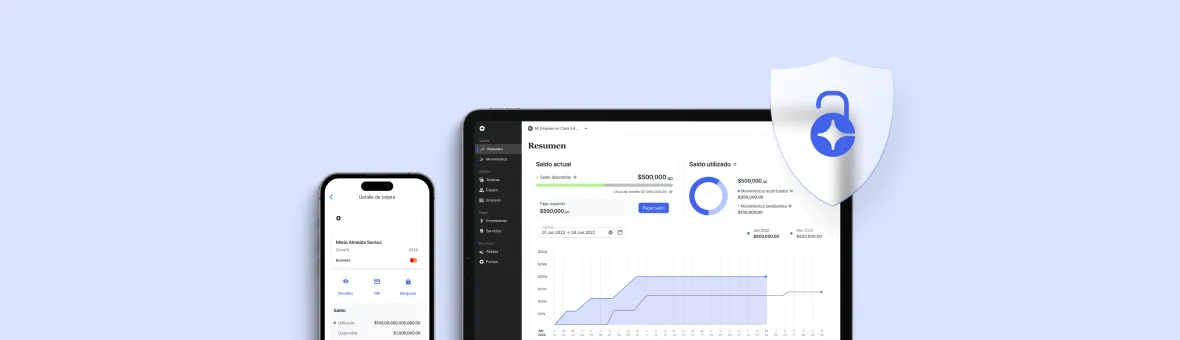
In today’s increasingly digitized and connected business landscape, security and the risk associated with fraud have become priority issues to address.
Over time, technological advances have provided countless benefits, creating a situation in which organizations depend increasingly on technology.
This context has also given rise to new threats that can cause financial losses, damage reputations, or compromise companies’ integrity. Even the strongest companies often need to take significant risks, whose impact can be mitigated through preparation.
In this article, then, we will explore the importance of security and the risk associated with fraud, and how appropriate controls, including two-factor authentication (2FA), can help protect your organization effectively.
You will also learn how to establish effective controls, taking into account risk prevention, identification, and response, and how to build and implement a solid foundation of protection that supports or strengthens business success.
Contents
1. What is risk management?
2. What do security and the risk associated with fraud involve, and why are they important?
3. How can you start managing security controls and the risk associated with fraud?
4. Advanced security technologies: two-factor authentication (2FA)
5. How to make your risk management plan successful
1. What is risk management?
By definition, risk management is the art of navigating the turbulent waters of business uncertainty. This is because it involves the ability to identify, analyze, and proactively respond to any potential risk in a strategic way. In other words, it is like weaving an invisible net that protects the organization from a wide range of possible contingencies.
These risks represent any factor that could compromise a project’s success, whether delays in the schedule, exceeding the planned budget, or any circumstance that negatively affects the team’s performance.
In this sense, risk management enables organizations to anticipate and respond effectively to the challenges they face to minimize adverse impacts. It is a search for balance between caution and boldness, in which controls and measures are established to maintain control over the company’s assets and objectives and avoid adversity that could harm performance.
When analyzing and managing a project’s risks, it is essential to rely on approaches and standards recognized in the industry. In this regard, the Project Management Institute (PMI) stands out as a global authority in project management. Its PMBOK Guide (Project Management Body of Knowledge) is a valuable reference for risk management professionals.
The PMBOK provides a comprehensive framework covering several areas of knowledge, including risk identification, analysis, and mitigation. By following the PMBOK guidelines, it is possible to adopt a structured and efficient approach to assessing risks and taking proactive measures.
Therefore, using the PMBOK as a reference provides a solid foundation that contributes to more effective and reliable risk management.
2. What do security and the risk associated with fraud involve, and why are they important?
Security refers to the measures and controls implemented to protect an organization’s assets, data, and systems against threats that can come from various sources. Fraud, on the other hand, refers to any intentional act intended to deceive, defraud, or cause economic losses to an organization.
Security and the risk associated with fraud affect every organization, regardless of size or industry. Threats have evolved and become more sophisticated, which means companies need to be prepared to face increasingly complex risks.
It is important to recognize that fraud can come from both internal and external sources, highlighting the need for robust controls to prevent and detect any fraudulent activity.
A security or fraud incident can affect financial stability, reputation, and business continuity. In addition, an organization that does not adequately address these risks may lose the trust of its customers, business partners, and employees.
At Clara, we understand the importance of security in the business environment. That is why our expense management platform and business credit cards were designed to the highest IT security standards.
Our cards are constantly evolving to offer the safest experience for all your purchases, whether in physical stores or online. For example, our virtual cards have a dynamic security code (CVV) that changes with each use, ensuring that they do not fall into the wrong hands.
3. How can you start managing security controls and the risk associated with fraud?
Now that you know what risk management is and why it matters, it is time to understand how to start managing security controls and the risk associated with fraud.
The range of cyberthreats is expanding every day, and technology risks are becoming increasingly relevant. These may include security breaches, cyberattacks, theft of confidential information, and system failures.
This situation makes it essential to have clear policies and procedures that guide actions and decisions at every level of the organization and are updated regularly to adapt to changes in the business environment and new forms of fraud.
Similarly, it is also necessary to establish monitoring and assessment mechanisms to identify any deviation or vulnerability in existing controls and take corrective action promptly.
Implementing advanced security technologies, then, can help reduce risks. In addition, it is essential to manage credentials and permissions properly, ensuring that only authorized people have access to critical information and resources.
Clara is committed to protecting our customers’ data. All transactions on our platform take place in an encrypted format to ensure that no one can misuse the data.
Our expense management platform is hosted in the Amazon Web Services (AWS) cloud, whose data centers are specifically designed to protect customers’ information and applications. In addition, we are regularly audited by the country’s leading cybersecurity companies and are in the final stages of obtaining security certifications such as ISO 27011 and PCI DSS.
4. Advanced security technologies: two-factor authentication (2FA)
Using advanced security technologies is essential to mitigate cyber risks. One tool that has proved highly effective in preventing risks is two-factor authentication (2FA).
Two-factor authentication adds an additional layer of security by requiring not only a password but also a second form of verification, such as a one-time access code sent to the user’s mobile phone. This means that even if login credentials are compromised, an attacker will not be able to access systems or sensitive data without the second authentication factor.
Implementing two-factor authentication can significantly strengthen a company’s security measures and minimize the risk of unauthorized access or fraudulent activity.
Two-factor authentication and access control are also aspects Clara takes into account.
If you need to block a card at any time, you can do so immediately in our app or web platform. In addition, our physical cards are updated to prevent confidential data from being cloned, and only the last 4 digits of the card are visible in the Clara app.
5. How to make your risk management plan successful
To ensure that your security and fraud risk management plan succeeds, it is important to consider the following key aspects:
-
Senior management commitment: genuine support from the organization’s senior management is very important, since it involves allocating adequate resources, establishing clear policies, and communicating the importance of security and fraud prevention at every level of the company.
-
Risk assessment and analysis: conduct a comprehensive assessment of fraud-related risks, identifying vulnerable areas and potential threats. This will allow you to prioritize prevention efforts and allocate resources appropriately.
-
Implementing preventive measures: strong internal controls and measures must be established to mitigate the identified risks. These may include separation of duties, implementation of clear policies and procedures, and use of advanced security technologies, such as the two-factor authentication mentioned earlier.
-
Continuous monitoring: it is essential to continuously monitor the controls implemented and key risk indicators, which helps identify any weakness or deviation in the system and take corrective action promptly.
-
Promoting a culture of ethics and reporting: encouraging an organizational culture based on ethics and integrity, in which employees feel safe and motivated to report any suspicious or fraudulent behavior, is an effective measure. Confidential communication channels must be established to report cases of fraud and ensure that appropriate action is taken.
-
Ongoing assessment and improvement: periodically assess the prevention plan, analyzing its effectiveness and making adjustments or improvements as needed. Stay up to date on new fraud trends and techniques to proactively adapt the prevention plan.
By considering these aspects and implementing a comprehensive security and fraud risk management plan, you will be better prepared to face today’s challenges and protect your organization’s assets and reputation.
In the highly competitive business landscape, where fraud and associated risks are present in various dimensions, security should be addressed with a proactive mindset, managing risks holistically.
Choose Clara
With comprehensive risk management, covering technological as well as legal, contractual, social, and ethical aspects, you will be in a strong position to face challenges and maximize opportunities in your organization.
At Clara, we are proud to be your best business security partner. Our priority is to provide peace of mind and confidence by centralizing your business expenses and offering full control over your cards and company information.