September 28, 2026
Technology, financial services and education, already the heaviest AI users, are pulling away from the pack
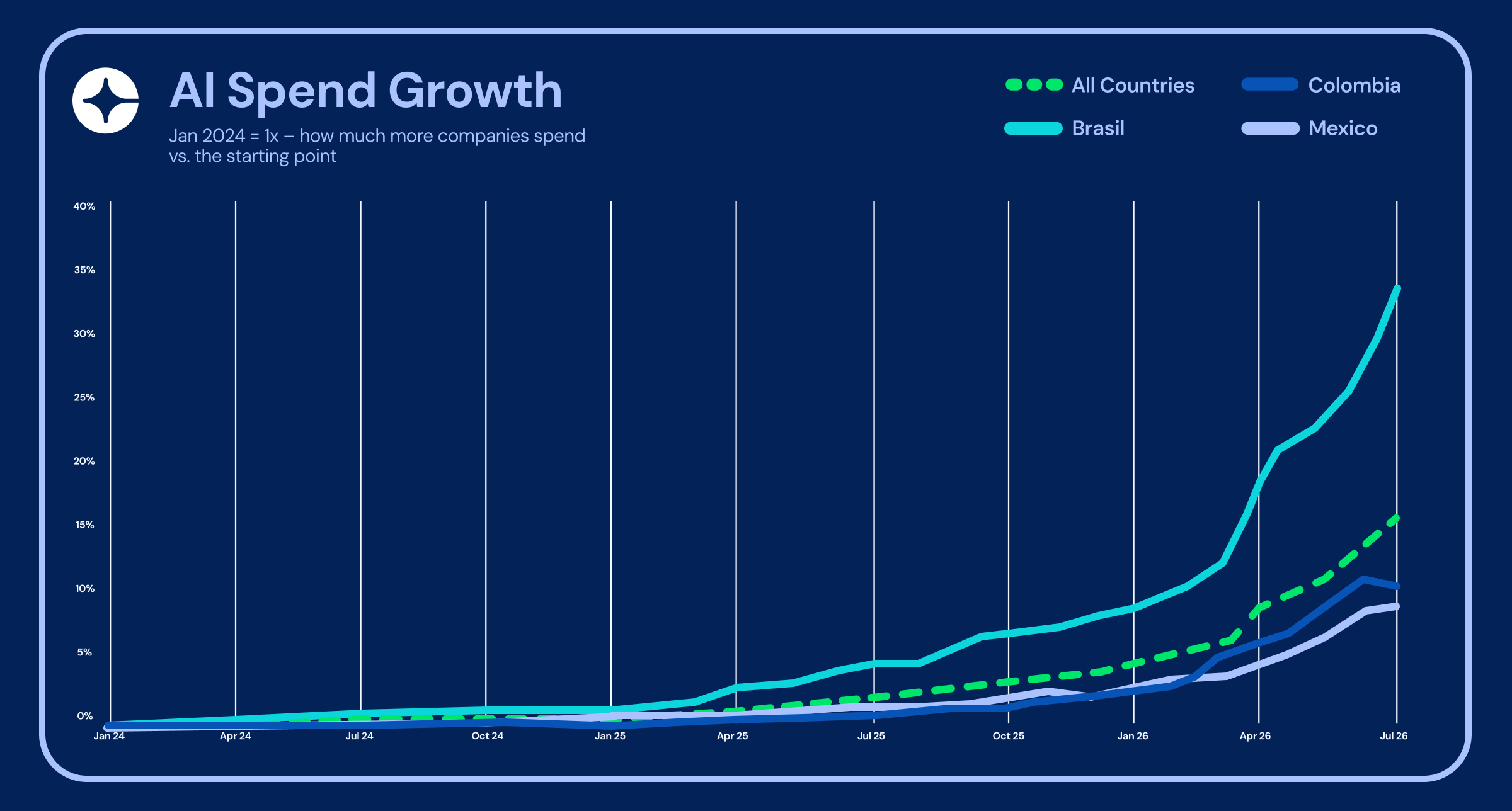
One in three companies across Brazil, Colombia and Mexico now pay for an AI tool on the corporate card. But the AI adoption gap between industries is widening.
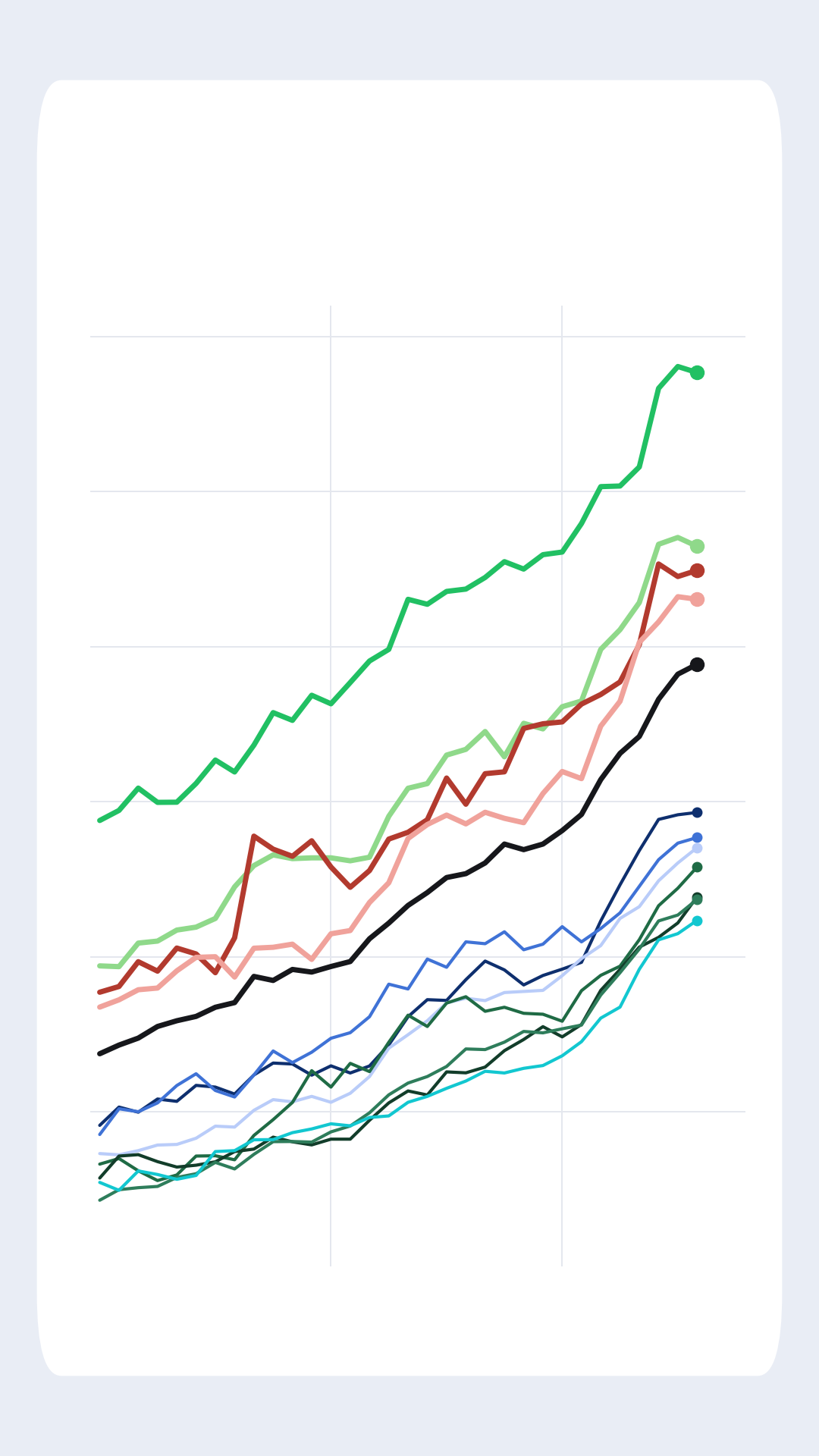
Technology, financial services and education, already the heaviest AI users, are pulling away from the pack. Food, logistics and manufacturing sit furthest behind.
The numbers are aggregated from more than 40,000 companies corporate card expenses, tracked by Clara's AI Monitor.
In plain distance the gap keeps widening, from about 24 to 35 percentage points between the top and bottom industry since early 2024.
But the back of the pack isn't frozen. Food, logistics and manufacturing were nearly untouched by AI a year ago, and a growing share of them now pay for it too. Off their small base they're actually adding faster than the leaders: logistics and food, for example, grew their AI use by more than 85% in a year.
In food and logistics, the AI that took off is almost entirely one kind of tool: large language models. ChatGPT and Claude dominate what these companies pay for, with image, voice and coding tools barely registering.
And these are not big companies. Roughly nine in ten of the food and logistics firms now paying for AI are small or mid-sized, with large enterprises fewer than one in ten, and take-up is highest among mid-sized firms. Where their official activity is on record, they turn out to be resolutely offline businesses: food-and-beverage makers and restaurants on one side; freight and ground-transport operators on the other.
For the sectors at the back, that gap is the opening. For CFOs, this kind of view offers rare, concrete hints for budget allocation, and a look at how competitors are structuring their AI investments. To build your complete picture of AI spend in Latin America, explore Clara's AI Monitor.


.webp)






.png)